Hardwood is tougher than you think — but not invincible
Finished hardwood floors are protected by a layer of polyurethane or similar finish, and that finish does most of the work. Your cleaning job is really twofold: don’t damage the finish, and don’t let water reach the wood underneath. Most hardwood floor damage comes not from wear but from well-meaning cleaning mistakes.
Mistake #1: too much water
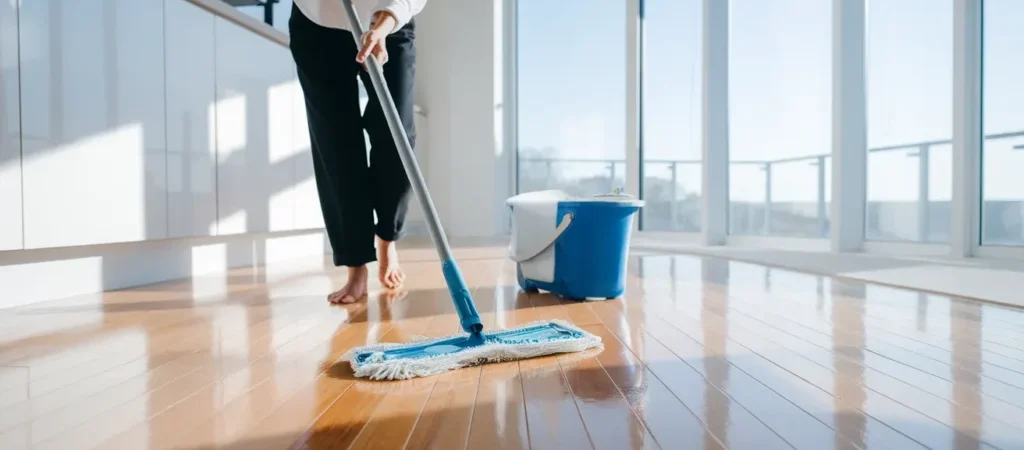
Wood expands when it absorbs water and contracts as it dries. Repeated cycles cause cupping (edges higher than centers), gaps, and finish failure. The rule: your mop should be damp, never dripping. A well-wrung microfiber mop leaves the floor barely damp and it should dry within a minute or two. If you’re leaving puddles or the floor stays wet for ten minutes, you’re using too much water.
Mistake #2: steam mops
Steam mops feel like a deep-clean upgrade, but most hardwood flooring manufacturers specifically advise against them. The combination of heat and moisture can force water into seams, cloud the finish, and void your floor’s warranty. What feels like sanitizing is often slow damage. Skip the steam on hardwood — save it for tile.
Mistake #3: vinegar and “natural” DIY cleaners
Vinegar is acidic, and over time acids dull polyurethane finishes. It might look fine after one use, but repeated vinegar mopping etches the protective layer and leaves floors looking hazy. The same goes for most all-purpose cleaners not formulated for wood — they can leave residue that builds up into a film and attracts dirt. The National Wood Flooring Association’s maintenance guidance consistently points to cleaners made specifically for hardwood floors: https://nwfa.org/
What to use instead
The routine that floor manufacturers actually recommend is refreshingly boring:
- Dry clean first, always. Sweep with a soft-bristle broom or vacuum with a hard-floor setting (turn off the beater bar, which can scratch). Grit is sandpaper underfoot — removing it before mopping prevents most scratches.
- Damp-mop with a hardwood floor cleaner. Use a pH-neutral cleaner formulated for wood floors, applied with a well-wrung microfiber mop. No bucket of soapy water.
- Clean spills immediately. Water, pet accidents, plant overflow — wipe them up now, not later. Standing water is the enemy.
- Place mats strategically. Doormats at entrances, a mat under the sink and dishwasher area, felt pads under furniture legs. Prevention is cheaper than refinishing.
The shine problem
If your floors look dull, the cause is usually residue buildup from the wrong cleaner, not a lack of polish. Before buying a “revitalizer” product, try damp-mopping with plain water (well-wrung) to see if the haze lifts — sometimes it’s just soap film. If the finish itself is worn through in high-traffic areas (you can see bare wood or the color is uneven), no cleaner will fix that; it’s time to talk to a refinishing professional.
One more caution: “rejuvenate” and polish products that promise a new shine can create a waxy layer that makes future refinishing difficult — some refinishers charge extra to strip them. Use them only if you’re committed to that path.
A simple weekly routine
- Vacuum or sweep the whole floor (hard-floor setting, no beater bar)
- Damp-mop with a wood-floor cleaner and a wrung microfiber mop
- Spot-check entryways and kitchen areas for sticky spots
- Check felt pads on chairs — replace the ones that fell off
That’s it. Hardwood floors don’t need elaborate care; they need the right care. Keep water minimal, skip the steam and the vinegar, and your finish will last years longer.